Most people don’t think about their trees until something forces them to. A branch scrapes the roof after a storm. The canopy starts blocking gutters. A neighbour raises concerns about overhanging limbs. By that point, the tree has usually been growing unchecked for years, and what could have been a straightforward maintenance job has become something more involved.
Crown reduction sits in an interesting middle ground in tree care. It’s not removal, but it’s more than a light trim. It’s a deliberate, technically specific form of pruning that reduces the overall size of a tree’s canopy while keeping the tree structurally sound and visually natural. Done well, it’s one of the most effective tools available for managing trees on residential, commercial, strata, and public properties across Australia.
The problem is that crown reduction is frequently confused with topping, an aggressive, damaging practice that looks similar on the surface but produces fundamentally different results. Understanding the difference, and knowing when crown reduction is actually the right call, is what this guide is about.
What Is Crown Reduction, Exactly?
Crown reduction is a pruning method that reduces the height and spread of a tree’s canopy by cutting branches back to suitable lateral growth points. Those laterals, the smaller branches that fork off from the main limbs, become the new branch tips. The tree’s natural shape is preserved. Growth continues from those points. The canopy is smaller, but it still functions and looks like the same tree.
This is the core distinction between crown reduction and topping. Topping removes large sections of the main scaffold without regard for where new growth will come from, leaving stubs that decay over time and produce weak, poorly attached regrowth. The Australian Standard AS 4373-2007 Pruning of Amenity Trees specifically identifies topping as poor practice and outlines the correct technique for size reduction, which aligns with what qualified arborists call crown reduction.
The reduction itself is measured as a percentage. A 20–25% reduction in crown volume is generally considered the safe upper limit in a single visit for most species. Going beyond that puts the tree under significant physiological stress and increases the risk of dieback, pest susceptibility, and structural failure.
When Is Crown Reduction the Right Choice?
This is where property owners often need guidance. Tree crown reduction isn’t something to do because a tree looks big. There are specific situations where it’s genuinely appropriate:
The tree has outgrown its location. A tree planted near a structure, power line, fence line, or boundary that has grown beyond what the space can accommodate is a candidate for crown reduction. Rather than removing the tree entirely, reducing the canopy brings it back within manageable proportions.
Wind load is a concern. A large, dense canopy in an exposed location creates significant wind resistance. In coastal and storm-prone areas of Queensland, this matters. Crown reduction reduces the sail effect, the mechanical load the canopy creates in high wind, which lowers the risk of structural failure during severe weather events.
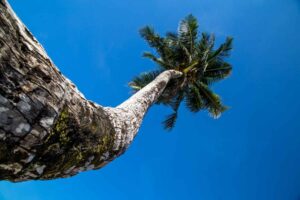
The tree is leaning or unbalanced. Uneven canopy weight over time shifts stress onto the root system and lower trunk. Selective tree crown reduction on the heavier side can rebalance the tree and reduce the mechanical tension pulling it in one direction.
Neighbours and boundaries. Overhanging branches onto adjoining properties is a common issue in residential and strata settings. Crown reduction on the affected side addresses the problem without removing the tree, which is often the preferred outcome for all parties.
Post-storm or post-damage recovery. After storm events, some trees sustain partial canopy loss. A controlled crown reduction can re-shape an asymmetric canopy and reduce further stress on the remaining structure.
How Crown Reduction Pruning Is Actually Carried Out
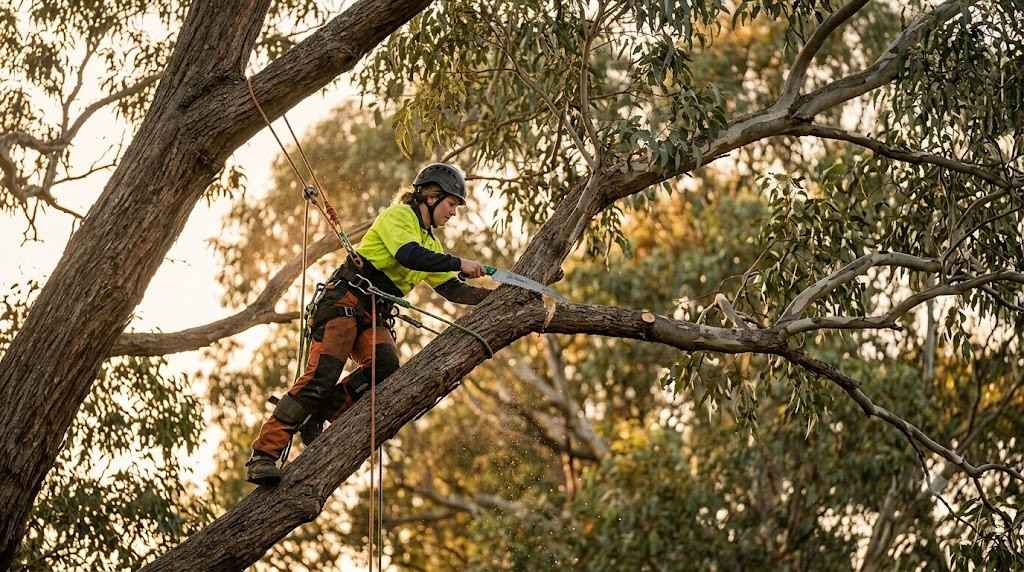
Crown reduction pruning is not a job that can be improvised. The process requires a working knowledge of tree biology, an understanding of how individual species respond to pruning, and the technical skill to make correct cuts at the right points.
Here’s how a qualified arborist approaches it:
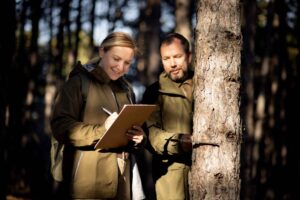
- Assessment first. Before any cutting, the whole tree is assessed, species, age, health, structure, root zone, and the surrounding environment. This determines whether crown reduction pruning is appropriate, what percentage of reduction is safe, and which branches are targeted.
- Identifying the laterals. Each cut is made back to a lateral branch that is at least one-third the diameter of the limb being removed. This ensures the lateral can take over as the new growing tip without being overwhelmed.
- Correct cut angle and position. Cuts are made just outside the branch collar, the slight swelling where a branch meets its parent limb, to preserve the tree’s natural wound-sealing response. A flush cut or a cut that leaves a long stub both interfere with this process and invite decay.
- Even distribution. The reduction is spread evenly through the canopy. Concentrating removal on one side or section creates imbalance and puts stress on the remaining structure.
- Volume check. Throughout the process, a competent arborist monitors how much live canopy has been removed. Staying within the 20–25% threshold is not a guideline, it’s a biological limit.
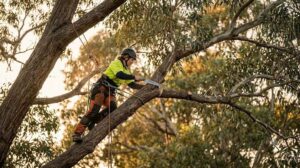
Tree canopy reduction on mature trees or large species often requires elevated work platforms, sectional rigging, and site management to protect the surrounding area. This is not DIY territory.
Crown Reduction vs. Other Pruning Services: A Quick Comparison
Service | What It Does | When It’s Used |
Crown reduction | Reduces overall canopy size while preserving shape | Tree too large for its location, wind load, boundary issues |
Crown thinning | Removes internal branches to improve airflow and light | Dense canopy, good size but poor interior structure |
Crown lifting | Removes lower branches to raise the canopy base | Clearance for pedestrians, vehicles, or buildings |
Tree canopy reduction | Another term for crown reduction; same technique, same standards | Often used interchangeably in Australian arboricultural practice |
Deadwooding | Removes dead and dying branches only | Safety and routine health maintenance |
Topping | Removes large sections indiscriminately | Not recommended, causes lasting structural damage |
Understanding which service applies to your situation is one of the main reasons an arborist assessment matters before any work is quoted or carried out.
Does Crown Reduction Harm the Tree?
Carried out correctly and within safe limits, crown reduction does not harm a healthy tree. Trees are biologically equipped to recover from pruning wounds, they produce a callus tissue that grows over the wound and seals it from decay and infection over time. The key conditions are that cuts are made at the right points, to the right laterals, and within the volume limits the tree can manage.
What does harm a tree is poor technique. Flush cuts, oversized stubs, excessive removal, and cuts made at the wrong time of year (for certain species) all interfere with the tree’s ability to compartmentalise wounds. Some species are also more sensitive to pruning than others, certain eucalypts, for example, respond poorly to heavy reduction and require a more conservative approach than species that are naturally more resilient.
This is why tree crown reduction should only be carried out by a qualified arborist, ideally one who is familiar with the species common to your region and who works to the Australian Standard AS 4373-2007.
What to Expect After Crown Reduction Pruning
Tree canopy reduction changes how a tree looks and behaves, at least in the short term. Here’s what’s normal and what to watch for:
- Temporary appearance change. The canopy will look lighter and less dense immediately after crown reduction pruning. This is expected. Over the following growing season, new lateral growth will fill the canopy back in.
- New growth from cut points. Epicormic shoots, small, fast-growing shoots that emerge near pruning cuts, are common after crown reduction. These can be managed in follow-up maintenance visits.
- Improved light and airflow. Gardens, lawns, and structures beneath a reduced canopy will see noticeably more light and better air movement. Tree canopy reduction is often one of the primary reasons property owners in shaded suburban blocks request the service.
- Reduced maintenance intervals. A well-executed crown reduction typically extends the time before the next intervention is needed, provided the tree responds well and is maintained on a reasonable schedule going forward.
If the tree shows signs of dieback, unusual discolouration, or fungal growth in the months following crown reduction, it should be reassessed by an arborist. These can indicate underlying health issues that the pruning process may have brought to the surface.
Whether you manage a residential property, a commercial site, a strata complex, or public green space, keeping your trees properly maintained is both a safety responsibility and a long-term investment. Crown reduction, when carried out correctly by qualified arborists, gives trees a sustainable future in the spaces they occupy.
If you’re concerned about canopy size, overhanging branches, or storm risk, Affordable Tree Specialists offers free, no-obligation assessments across Hervey Bay, Maryborough, and the wider Wide Bay region. Our team works to Australian Standards and gives you honest advice before any work begins.
Reach out to Affordable Tree Specialists today and find out whether tree crown reduction or crown reduction pruning is the right step for your trees.
FAQs
Crown reduction typically costs $250 to $800 per tree, depending on size, species, access, and reduction extent. Large or complex canopies cost more. Request a free on-site quote.
Most trees need crown reduction every 3 to 5 years. Fast-growing or fruit-bearing species may need pruning more often. Species, age, and growth rate determine the exact interval.
Often, yes. Fraser Coast Regional Council Vegetation Protection Orders require a permit for certain native species or trunks above set dimensions. Check with your local council first.
No. Some natives, including certain wattles and Proteaceae species, regrow poorly from old wood and are unsuitable for heavy reduction. A qualified arborist assesses suitability before recommending work.
Crown reduction shortens branches to reduce overall canopy size. Crown thinning removes selective interior branches to improve airflow and light without changing the tree’s natural size or shape.
Late winter to early spring, before active growth, suits most species. Timing varies by species and condition, so a qualified arborist confirms the right window during assessment.