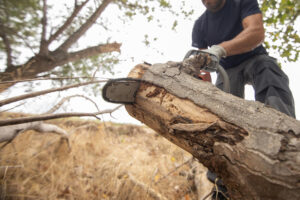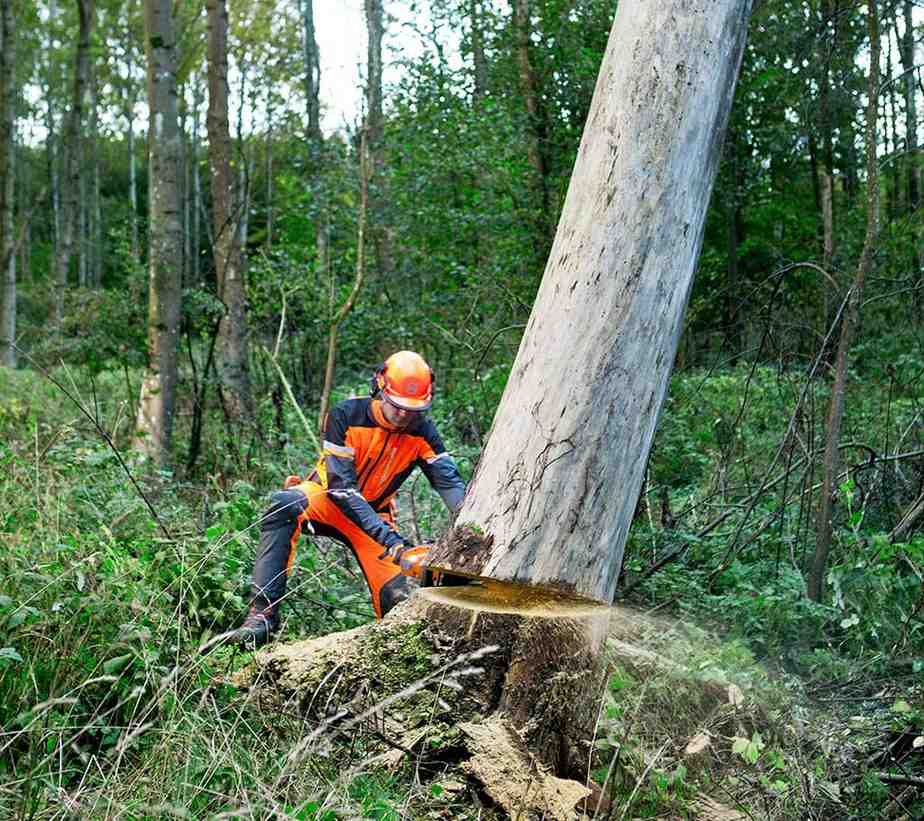
Dead tree removal in Hervey Bay becomes necessary when a tree shows clear signs of structural failure. The seven most reliable warning signs are sparse foliage during growing seasons, large dead branches in the canopy, bark falling away from the trunk, fungal growth at the base, sudden leaning, hollow or cracked trunks, and termite or rot activity. In coastal Wide Bay properties exposed to salt air, summer storms, and shifting moisture conditions, these signs often appear earlier and progress faster than property owners expect.
Most failing trees do not collapse overnight. The decline starts months earlier with subtle changes that are easy to overlook. A patchy canopy. Bark peeling away. Limbs that sound hollow when struck. Then one windy afternoon changes everything.
Across residential homes, strata complexes, schools, acreage blocks, and commercial sites in Hervey Bay and the wider Wide Bay region, a neglected tree creates more than visual problems. It can weaken fencing, damage roofs, interfere with powerlines, and create serious public safety risks. Removing a failing tree is not about appearance. It is about protecting the spaces people use every day.
This guide explains the seven warning signs to watch for, the risks of leaving them, and how qualified arborists approach the work safely across Hervey Bay, Maryborough, and the surrounding region.
Why Does a Dead Tree Need to Come Down?
A dying tree becomes more unstable every month it stays standing. As internal moisture disappears, timber turns brittle and unpredictable. Branches lose flexibility. Root systems weaken underground. Eventually, the tree can no longer hold its own weight.
For property owners across Hervey Bay, delaying the work usually leads to avoidable costs. Common outcomes include roof damage from falling limbs, cracked driveways caused by shifting roots, blocked gutters, damage to vehicles, fencing, or sheds, injury risks in public areas, and expensive emergency call-outs after storms.
Queensland Government vegetation management guidance recommends that unstable vegetation near structures or public areas should always be assessed professionally when safety risks are present.
A failing tree rarely improves with time. Once decay sets in, deterioration accelerates.
What Are the Most Common Signs a Tree Is Dead?
The most common signs are visible in the canopy, on the bark, around the base, and inside the trunk. Each one tells a slightly different story about how far decline has progressed, and together they help an arborist decide between pruning, monitoring, or full removal.
Sparse Leaves During Growing Seasons
Sparse foliage during growing seasons is one of the earliest signs of internal decline. Healthy trees follow predictable seasonal growth. If one tree stays bare while surrounding trees are thriving, the trunk and branches may no longer be transporting nutrients properly. Hervey Bay property owners often notice this first, well before booking an arborist inspection.
Large Dead Branches in the Canopy
Dead branches in the canopy are dangerous because they dry out and lose flexibility. Heavy limbs can snap without warning during storms or strong coastal winds. This pattern is common in older gums, palms, and shade trees across Wide Bay residential areas. Repeated branch drop is often the tipping point for arranging an arborist’s assessment before structural failure worsens.
Bark Falling Away From the Trunk
Tree bark works like protective skin, so heavy bark loss usually points to active decay underneath. Some shedding is natural, but when bark peels in large patches and exposes dead wood, the tree may already be advanced into deterioration. Combined with visible fungal growth, this stage usually calls for a qualified arborist assessment.
Fungal Growth Near the Base
Fungi around the roots or lower trunk signals internal decay below the surface. Mushrooms alone do not always mean a tree is finished, but they usually indicate moisture imbalance and timber breakdown. Arborists inspect the root zone carefully because underground instability changes how safely a tree can be brought down.
The Tree Leans Suddenly
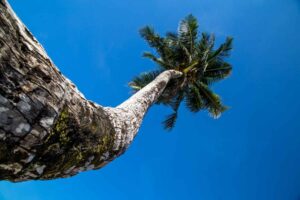
A sudden lean usually points to root instability or soil movement after heavy rain, both common after Wide Bay summer storms. Not every leaning tree is dangerous. Some species naturally develop at angles over decades. The concern is rapid or recent change. For schools, strata properties, and commercial sites with pedestrian traffic, early action prevents emergency situations during severe weather.
Hollow or Cracked Trunks
A hollow trunk does not automatically mean the tree has to come down. Some mature trees live with partial internal cavities for years. The real concern is when cracks spread through load-bearing sections of the trunk. Large cracks reduce structural stability quickly, and arborists carefully assess how much healthy timber remains before deciding between staged dismantling or machinery assistance.
Termite Activity and Rot
Dead and declining trees attract insects fast. Termites, borers, and ants move into weakened timber once moisture levels change inside the trunk. The insects may not kill the tree on their own, but they speed up internal collapse. In Hervey Bay’s warm coastal climate, this kind of decay often progresses faster than property owners expect.
How Is the Removal Carried Out Safely?
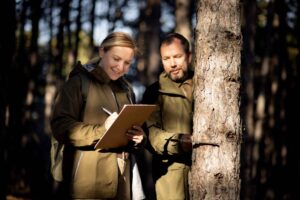
Safe removal is a staged process, not a single cut. Every site needs planning based on tree size, access, nearby hazards, and structural condition. Qualified arborists follow a controlled sequence from inspection through to clean-up.
Removal Stage | Purpose |
Tree inspection | Assess stability, decay, and hazards |
Site planning | Identify nearby structures, fences, and access points |
Safety setup | Establish controlled work zones |
Sectional dismantling | Remove branches progressively |
Controlled lowering | Protect nearby assets |
Waste removal | Clear timber and debris |
Stump grinding | Remove the remaining stump if required |
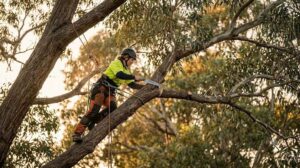
In confined residential spaces around Hervey Bay, the team usually dismantles the tree section by section using climbing systems and rigging equipment, rather than dropping it whole. For complex jobs across the Wide Bay region, professional tree removal is handled by qualified arborists with the right equipment and insurance.
Why Is DIY Removal So Risky?
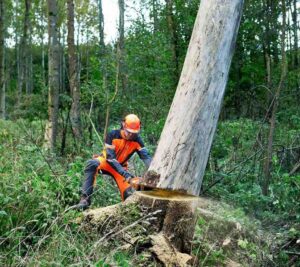
DIY work on a dead tree is risky because dead timber behaves nothing like healthy timber during cutting. Brittle wood splits unexpectedly. Hollow sections collapse without warning. Weak branches fail while someone is still positioned above ground.
The risk gets worse near rooflines, powerlines, public footpaths, swimming pools, shared strata boundaries, and commercial car parks. Professional crews use specialised equipment, fall protection, and controlled dismantling techniques designed for unstable trees. Powerline clearance rules and council approval requirements may also apply, depending on the species and the location.
What Happens After the Tree Is Removed?
Removing the tree is only half the job. The rest is making the space usable again. Most property owners want the area cleaned, cleared, and ready to walk through or replant.
Qualified arborists usually offer stump grinding, mulching, root management, green waste removal, site levelling, and tree replacement recommendations. For commercial and strata sites across Hervey Bay, ongoing maintenance planning often follows a major project to reduce future risks across shared outdoor areas.
Which Properties Benefit Most From Professional Tree Removal?
Every property type benefits, but the priorities are different.
Residential properties. Homeowners act to protect roofs, fences, gardens, and outdoor entertaining areas.
Commercial sites. Businesses reduce public liability risk while improving property presentation and site access.
Strata complexes. Body corporates protect common areas, pathways, and shared parking.
Public spaces. Schools, parks, and council-managed properties prioritise safety around high pedestrian traffic zones.
Across every property type in Hervey Bay and the Wide Bay region, acting early lowers the chance of emergency storm damage and the repair bills that follow.
How Can You Prevent Trees From Reaching This Stage?
Most trees never need full removal if the early warning signs are managed properly. Regular maintenance often extends tree health by years and catches problems before they become hazards.
Preventative arborist services include scheduled pruning, canopy thinning, pest monitoring, soil condition assessments, storm preparation trimming, and root management. Early inspections often pick up structural weaknesses long before any major work is needed.
Need Dead Tree Removal in Hervey Bay?
A failing tree rarely becomes safer with time. What starts as a few brittle branches can turn into a major property hazard during storms, strong winds, or heavy rain. A professional assessment gives Hervey Bay property owners a clear view of the risks before serious damage happens.
Whether you manage a residential home, strata complex, commercial property, or public site, acting early protects structures, improves safety, and restores usable outdoor space. For difficult access areas, hazardous trees, or larger projects, qualified arborists keep the process safer and easier to manage.
Affordable Tree Specialists is a family-owned tree care company led by Mitchell Jovic, serving Hervey Bay, Maryborough, and the wider Wide Bay region for over seven years, with a team that brings 35+ years of collective experience, full insurance, and 24/7 emergency availability.
FAQs
Removal is safer than pruning when the tree has extensive decay, hollow sections, or major structural instability. A qualified arborist inspection in Hervey Bay confirms the right call.
Yes, A tree can produce limited foliage while declining internally, and acting early prevents the larger safety risks that follow once decay progresses.
Most residential jobs across Hervey Bay finish within a day, depending on tree size, site access, and the hazards nearby.
No, Qualified arborists use controlled dismantling and rigging systems to protect surrounding gardens, fences, and structures during the work.
Sometimes, Approval may be required depending on tree species, location, and environmental protections. A qualified Hervey Bay arborist can advise on local council rules.
Branches, timber, and debris are chipped on-site, removed, or processed into mulch, depending on the project scope and what suits the property.
Costs depend on tree size, location, access, and decay severity. Affordable Tree Specialists provide free, honest, no-obligation quotes for every Hervey Bay and Maryborough job.
Affordable Tree Specialists run a 24/7 emergency response across Hervey Bay, Maryborough, and the Wide Bay region for hazardous trees, storm damage, and urgent insurance work.